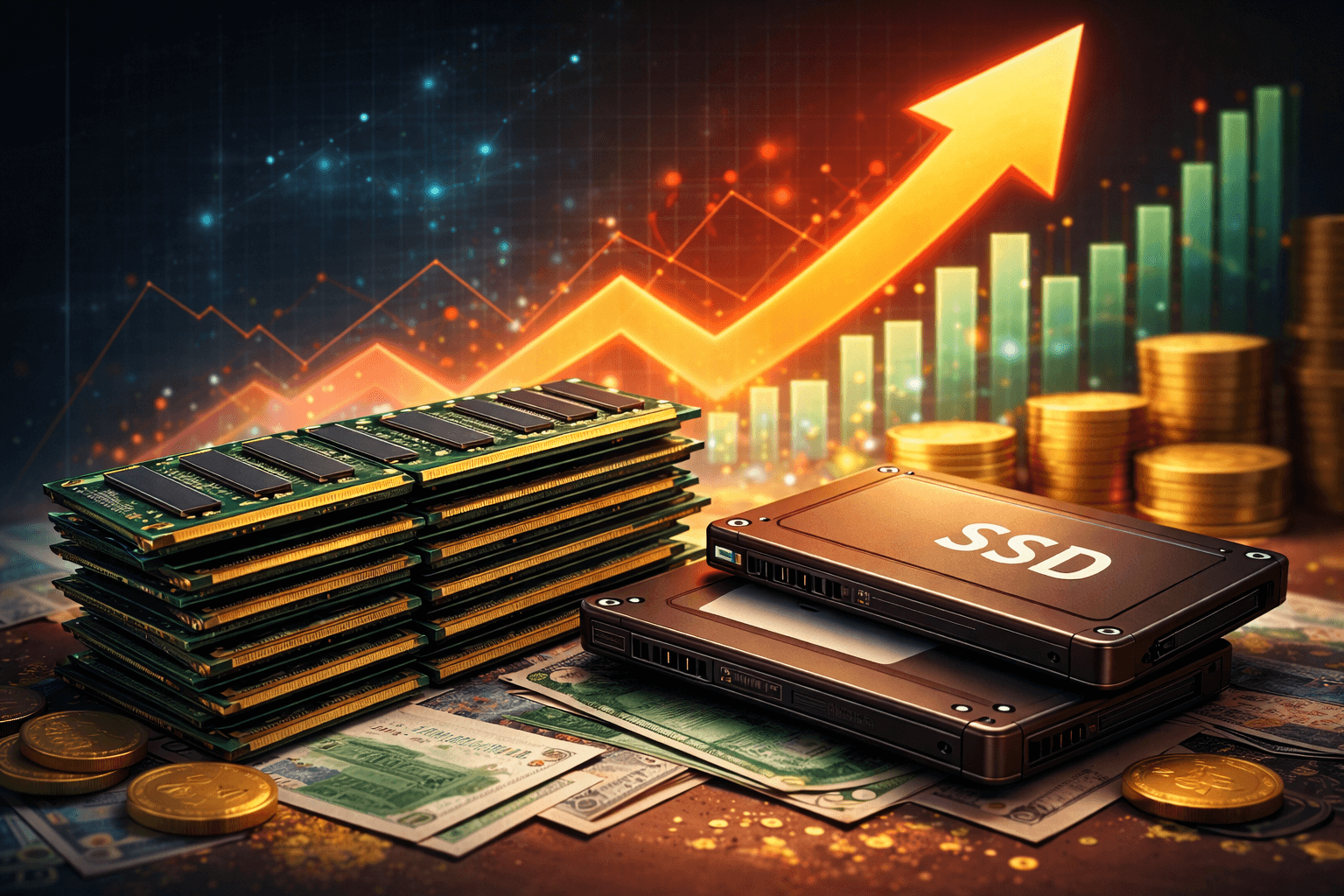
If you've been thinking about buying a new computer or upgrading your current one, you might want to move sooner rather than later.
Over the past year, the cost of computer memory (RAM) and storage (SSDs) has started climbing again — and industry experts expect prices to keep rising throughout 2026 and beyond.
This isn't a short-term blip. It's the start of a new memory price cycle, and it's already affecting laptop and desktop prices across the UK.
Here's what's going on, and what it means for you.
The Short Version
- RAM and SSD prices are rising fast
- The increase is global and affects all PC manufacturers
- Prices are expected to keep climbing for the next 1–2 years
- Waiting could mean paying significantly more for the same computer later
Now let's unpack why.
Why Memory Prices Are Going Up
1. There Are Only Three Companies Making Most of the World's Memory
Nearly all RAM and SSD memory chips are produced by just three manufacturers:
- Samsung
- SK Hynix
- Micron
That's over 90% of the global supply controlled by a tiny number of companies.
When supply tightens, prices move quickly — because there simply aren't many alternative sources.
And recently, supply has tightened dramatically.
2. AI Is Consuming Huge Amounts of Memory
Artificial Intelligence isn't just changing software — it's changing the hardware market too.
Modern AI systems require enormous data centres packed with specialised memory. These servers use huge quantities of high-performance RAM, and they are far more profitable for manufacturers than consumer PC memory.
So memory factories are doing the logical thing:
They're prioritising AI and data-centre customers.
That means fewer chips being produced for everyday laptops and desktops.
More demand + less supply = higher prices.
3. One Major Consumer Memory Brand Is Leaving the Market
Micron has announced it is exiting the consumer RAM and SSD market (including the well-known Crucial brand).
This reduces competition and leaves even fewer suppliers producing consumer-grade memory.
When competition drops, prices rarely fall.
4. New Factories Take Years to Build
You might wonder: why not just make more memory?
Unfortunately, semiconductor factories take years and billions of pounds to build.
New memory plants being constructed today aren't expected to significantly increase supply until 2027–2028.
That means the current shortage isn't likely to disappear anytime soon.
What This Means for Computer Prices
RAM and SSDs are core components of every modern computer. When their prices rise, the cost of new PCs rises too.
Manufacturers and retailers across the industry have already reported:
- RAM prices doubling or tripling in some cases
- SSD costs increasing sharply year-on-year
- PC manufacturers raising prices to cover rising component costs
This affects:
- Laptops
- Desktop PCs
- Gaming PCs
- Student computers
- Everyday home computers
Even budget machines are becoming more expensive to build.
The Return of the "Memory Price Cycle"
The tech industry has seen this before.
Memory pricing follows long cycles:
- Prices fall when supply is plentiful
- Manufacturers cut production when profits drop
- Supply tightens
- Prices surge again
⠀ We are now firmly in Stage 4.
Industry analysts expect this upward phase to last at least 1–2 years, possibly longer.
In other words, we are early in the price rise — not near the end of it.
Why Waiting Could Cost You More
Normally, waiting to buy tech can save money.
Right now, the opposite is true.
If forecasts are correct, the same computer could cost noticeably more in 6–12 months.
We're already seeing:
- Fewer discounts on RAM and SSD upgrades
- Less aggressive laptop pricing
- More frequent PC price adjustments
And there's no clear sign of relief in the near future.
The Practical Takeaway
If you need a new computer in the next year, buying sooner makes sense.
You'll likely:
- Avoid future price increases
- Get better value for money
- Secure current component availability
- Enjoy the performance benefits immediately
Waiting no longer offers the savings it once did.
Need Advice on a New Computer?
If you're unsure what to buy, or wondering whether to upgrade or replace your current machine, we're always happy to help.
Memory prices may be rising, but choosing the right computer still makes a huge difference — and we can make sure you get the best value while prices are still relatively stable.
Thinking about upgrading? Now might be the right time.